
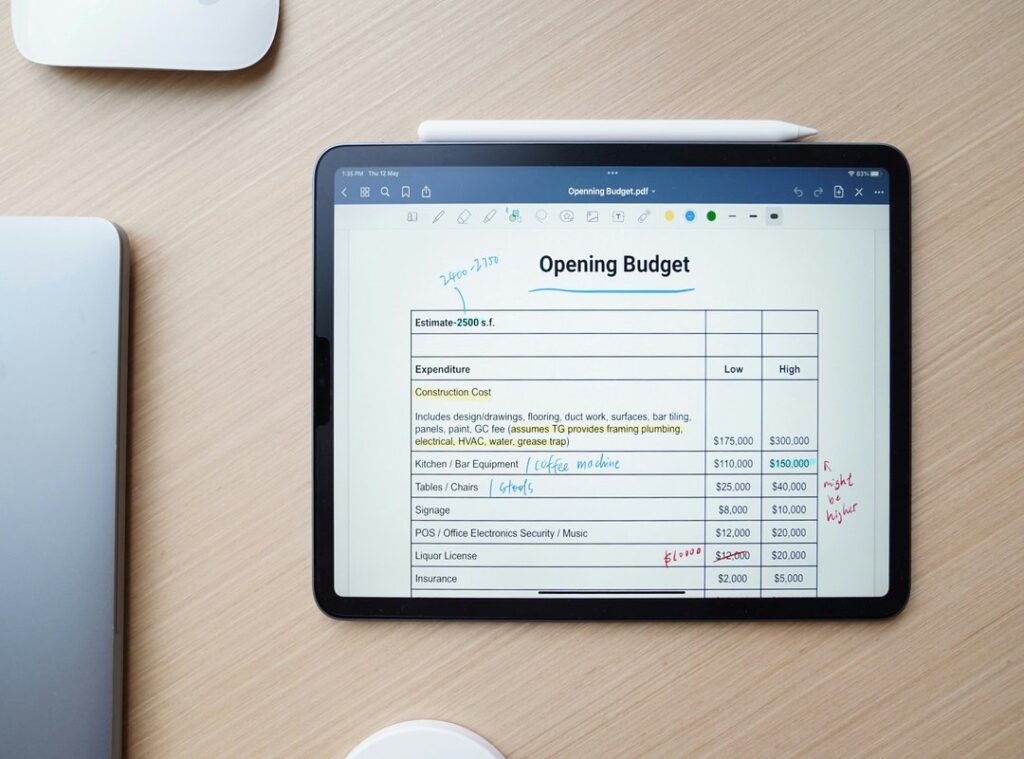
Your budget is already broken.
You spent weeks building it. Got sign-off in January. And by March?
It’s useless.
Revenue dropped. A key supplier hiked prices. Your biggest client paused spend.
None of that was in the forecast.
So you’re stuck choosing between ignoring reality or scrambling to re-forecast. Again.
I’ve helped over 80 companies dump their static annual budget. Not once. Not twice.
Every year.
They stopped fighting last year’s numbers and started planning for what’s actually happening.
That’s why I’m writing this.
Flexible Budgeting Aggr8budgeting by Aggreg8 isn’t theory. It’s what we built after watching too many teams waste time on budgets no one trusts.
You’ll learn exactly how adaptive budgeting works. No jargon. No fluff.
Just the steps that get real results.
You’ll see how to adjust fast. Without chaos or endless meetings.
And yes, it works even if your CFO still carries a paper ledger.
This article gives you the first real alternative to the annual budget treadmill.
Read it. Try one idea this week. Then tell me if it feels like breathing again.
The Cracks in Traditional Budgeting: A Reality Check
I used to spend three months every year building a budget.
Then I’d present it. Celebrate it. File it away.
And watch it crumble by March.
Static annual budgets are broken. Not slightly (broken.) Like using a flip phone to run a drone show.
They’re time-consuming & inefficient. Finance teams burn 200+ hours on a document that’s outdated before Q1 ends. (Yes, that’s a real average (CFO.com,) 2023.)
You’re not forecasting. You’re fossilizing assumptions.
Lack of agility? Try this: Your biggest competitor drops prices by 30%. Your budget says “hold the line.” But your sales team needs to match it now.
Not next fiscal year.
Static budgets don’t pivot. They just sit there. Judging you.
And they’re disconnected from reality. Relying on last year’s numbers while inflation spikes, supply chains snap, and customers vanish into TikTok shops.
It’s like navigating downtown LA with a 1998 Thomas Guide.
72% of finance leaders say their current process doesn’t support strategic decisions. (Gartner, 2024.)
That’s not a glitch. That’s the system.
So what do you do?
You stop treating budgeting like a tax audit and start treating it like a dashboard.
Aggr8budgeting is how you get there.
Flexible Budgeting Aggr8budgeting by Aggreg8 lets you adjust on the fly (no) re-approval loops, no spreadsheet purgatory.
I cut my monthly forecast cycle from 14 days to 48 hours.
You can too.
Stop polishing a relic. Start steering.
Adaptive Budgeting Is Not a Calendar Event
It’s not something you do in January and forget until December.
I stopped treating budgeting like a tax return years ago.
And you should too.
Adaptive budgeting means updating numbers as things change. Not waiting for the fiscal year to end. Not pretending last year’s numbers still mean anything.
Rolling forecasts are the backbone. You look 12. 18 months ahead. Then shift that window forward every month.
No more “set it and forget it” nonsense.
Scenario planning isn’t fantasy football. You map out what happens if sales drop 15%. What if hiring freezes hit.
I covered this topic over in Aggr8budgeting financial news by aggreg8.
What if a key vendor doubles prices.
Driver-based modeling ties it all together. You track what actually moves the needle: leads per month, cost per hire, average deal size. Not vague assumptions.
Static budgeting is like using a paper map in downtown LA at rush hour. Adaptive budgeting is GPS (rerouting) when traffic jams, accidents, or construction pop up. (Yes, I just compared finance to Waze.)
Not legacy line items.
This flips finance from scorekeeper to strategist.
From “here’s what happened” to “here’s where we steer next.”
The finance team stops being the department that says no. They start asking better questions. They help decide which growth path to take (not) just whether it fits last year’s plan.
Flexible Budgeting Aggr8budgeting by Aggreg8 is one way people try to automate this shift.
But tools won’t fix broken habits.
If your team still fights over spreadsheet versions in email threads, no software saves you.
Do you update your forecast after a major win? Or do you wait for the quarterly review? Be honest.
How Aggreg8 Actually Fixes Your Budgeting

I stopped trusting spreadsheets the day my CFO asked me to “just eyeball the HR headcount numbers” and plug them into finance.
Aggreg8 doesn’t ask you to trust anything. It pulls live data (right) now. From your ERP, CRM, and HR systems.
No exports. No copy-paste. No version confusion.
That’s Real-Time Data Integration. Not a buzzword. A hard stop on manual entry.
You get one source of truth. Not three versions of Q3 revenue with different assumptions baked in.
Changing Scenario Modeling? I ran five cash flow scenarios before lunch last week. One had layoffs.
One had hiring spikes. One assumed a 12% tax hike. All updated instantly.
No rework. No waiting for IT.
Does that sound like overkill? Ask yourself: when was the last time your forecast survived past month two?
Collaborative Workflows mean your sales head edits pipeline assumptions in the model, not in a Slack thread. Your ops lead adjusts capacity limits in context, not in a separate doc.
No more chasing PDFs or chasing people.
It saves dozens of hours per month. But more importantly (it) stops decisions from being made on stale data.
Aggr8budgeting Financial News by Aggreg8 keeps me updated on regulatory shifts that impact modeling logic. Like new IRS guidance that changed how we treat deferred revenue.
I used to spend 14 hours a month reconciling budget vs actuals. Now it’s under 90 minutes. And the numbers are right.
Flexible Budgeting Aggr8budgeting by Aggreg8 means you’re not locked into January’s assumptions in November.
You adapt. Fast.
Your finance team isn’t just reporting history. They’re steering the ship.
And yes. It works even if your ERP is older than your laptop. (Mine is.)
Your First 90 Days: No Magic, Just Momentum
I tried rolling this out cold once. It failed. Badly.
So I built a rhythm instead. Three months. One real step at a time.
Month one: connect your core data sources. ERP, CRM, bank feeds. Get them talking to Aggr8budgeting.
Then lock in a baseline rolling forecast. Not perfect. Just there.
You’ll tweak it later.
Month two: pick one thing that moves the needle (sales) volume or material costs, not both. Build two simple scenarios around it. What if we hit 90% of target?
What if we crush it? Test the model. See where it bends.
Month three: bring in two or three department heads. Not for approval. For input.
This isn’t about flipping a switch. It’s about building muscle memory.
Let them adjust assumptions in the tool, not over email.
You don’t need buy-in from everyone on day one. You need one working loop.
And if you want the guardrails (the) exact order to set permissions, how to handle stale data, what not to automate yet. The Aggr8budgeting Finance Guideline From Aggreg8 lays it out plainly.
Flexible Budgeting Aggr8budgeting by Aggreg8 works only if you start small and stay consistent.
Your Budget Doesn’t Have to Break Every Quarter
Static budgets fail. I’ve watched them crack under inflation, hiring shifts, and surprise expenses. You know it too.
They’re not broken because you’re bad at math. They’re broken because the world moved (and) your tools didn’t.
Flexible Budgeting Aggr8budgeting by Aggreg8 fixes that. Not with spreadsheets you update manually. Not with dashboards that lie until it’s too late.
It adapts. Automatically. With real-time data.
While you sleep.
You want control (not) chaos. Predictability. Not panic.
A budget that bends instead of snaps.
So why keep patching last year’s plan?
Ready to see how it works? Schedule a personalized demo of Aggreg8’s adaptive budgeting solutions.
It takes 12 minutes. And yes. It actually works on day one.
 Frankie Drakershopp has opinions about expert tax insights. Informed ones, backed by real experience — but opinions nonetheless, and they doesn't try to disguise them as neutral observation. They thinks a lot of what gets written about Expert Tax Insights, Tax Law Updates and Changes, Personal Finance Advice is either too cautious to be useful or too confident to be credible, and they's work tends to sit deliberately in the space between those two failure modes.
Reading Frankie's pieces, you get the sense of someone who has thought about this stuff seriously and arrived at actual conclusions — not just collected a range of perspectives and declined to pick one. That can be uncomfortable when they lands on something you disagree with. It's also why the writing is worth engaging with. Frankie isn't interested in telling people what they want to hear. They is interested in telling them what they actually thinks, with enough reasoning behind it that you can push back if you want to. That kind of intellectual honesty is rarer than it should be.
What Frankie is best at is the moment when a familiar topic reveals something unexpected — when the conventional wisdom turns out to be slightly off, or when a small shift in framing changes everything. They finds those moments consistently, which is why they's work tends to generate real discussion rather than just passive agreement.
Frankie Drakershopp has opinions about expert tax insights. Informed ones, backed by real experience — but opinions nonetheless, and they doesn't try to disguise them as neutral observation. They thinks a lot of what gets written about Expert Tax Insights, Tax Law Updates and Changes, Personal Finance Advice is either too cautious to be useful or too confident to be credible, and they's work tends to sit deliberately in the space between those two failure modes.
Reading Frankie's pieces, you get the sense of someone who has thought about this stuff seriously and arrived at actual conclusions — not just collected a range of perspectives and declined to pick one. That can be uncomfortable when they lands on something you disagree with. It's also why the writing is worth engaging with. Frankie isn't interested in telling people what they want to hear. They is interested in telling them what they actually thinks, with enough reasoning behind it that you can push back if you want to. That kind of intellectual honesty is rarer than it should be.
What Frankie is best at is the moment when a familiar topic reveals something unexpected — when the conventional wisdom turns out to be slightly off, or when a small shift in framing changes everything. They finds those moments consistently, which is why they's work tends to generate real discussion rather than just passive agreement.