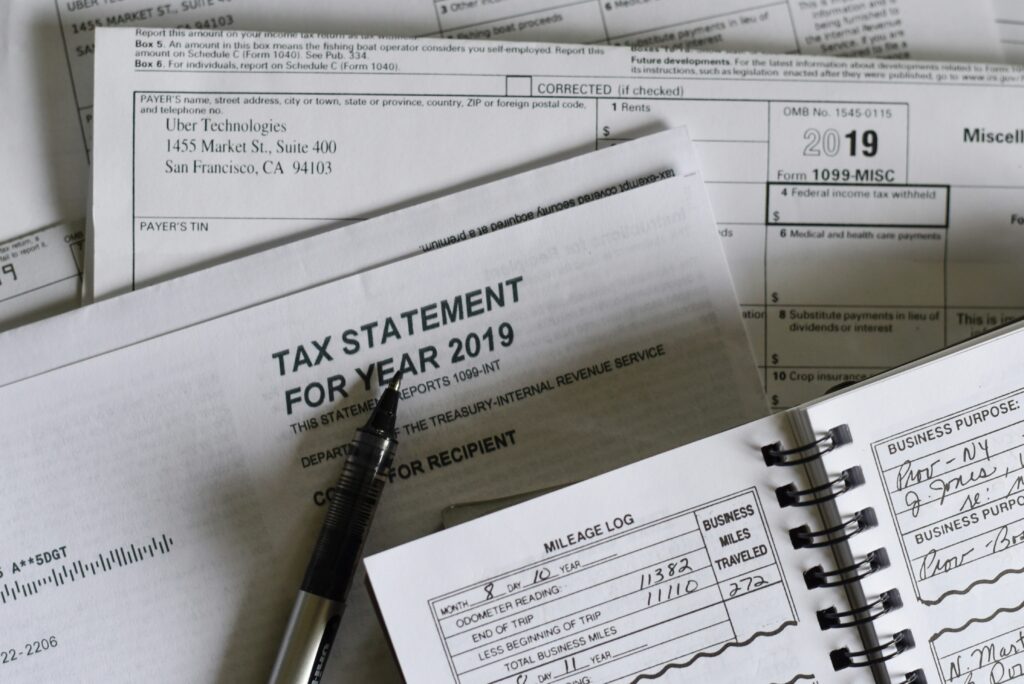

Why Quarterly Taxes Matter
Freelancers often operate without the traditional employer tax withholdings, which is why the IRS requires many self employed individuals to make estimated tax payments throughout the year. Understanding and keeping up with these quarterly payments can help you avoid financial headaches (and penalties) down the line.
The IRS Expects Regular Payments
If you’re self employed, the IRS treats you as both employer and employee. That means it’s your responsibility to pay income tax and self employment tax throughout the year not just at filing time.
Estimated taxes are typically required if you expect to owe at least $1,000 in taxes for the year after subtracting withholdings and credits
These payments are due in four installments: April, June, September, and January
They cover both your income tax and self employment tax (for Social Security and Medicare)
Why Waiting Until Tax Season Can Cost You
Delaying tax payments until April can lead to more than just a large bill it can trigger penalties and interest fees.
The IRS imposes underpayment penalties if you don’t pay enough throughout the year
These penalties are calculated based on how much you underpaid and how late the payment is
Even if you pay in full by April, if your estimated payments fell short during the year, you may still owe extra
Do You Even Need to Pay Quarterly?
Not every freelancer is required to pay estimated taxes. There are a few exceptions, but it’s important to check your situation.
You may be exempt if:
You had zero tax liability in the previous year
You were a U.S. citizen or resident for the whole year
Your previous tax year covered a full 12 months
However, if your client work, side gigs, or contracting jobs are bringing in income without withholdings, odds are you need to start estimating payments.
Tip: If you’re unsure, consult a tax advisor or use an IRS tax estimation tool to determine whether you’re on the hook for quarterly payments.
Start with Your Estimated Annual Income
Before you can figure out how much to set aside for taxes, you need a clear picture of what you’re actually making. Start by tallying up every income source. That includes long term clients, one off gigs, platform payouts (think YouTube, Patreon, Upwork), and any side hustles you’ve got running. If money came into your account because of your work it counts.
Next, ditch the idea that every month looks the same. Some quarters will be loaded, others may feel like a desert. Build your estimate with these income swings in mind. Go back and look at what you made last year month by month if you’ve got the data. If not, start tracking now.
And here’s one key tip: forecast on the conservative side. Overestimating your income won’t hurt much you might pay a bit more up front, but you’ll get a refund later. Underestimating, though, can trigger penalties or a painful tax bill. Play it safe. Lowball the highs and stay humble with predictions. This isn’t about optimism it’s about being prepared.
Know What You Owe: Self Employment Tax + Income Tax

Understanding what you actually owe is a crucial step in estimating your quarterly taxes accurately. Freelancers are responsible for both self employment tax and income tax, and your total obligation may also vary based on where you live.
What Is Self Employment Tax?
If you’re self employed, you’re essentially paying both the employer and employee share of Social Security and Medicare. This is known as the self employment tax.
Rate: 15.3% total (12.4% for Social Security + 2.9% for Medicare)
Applies to your net earnings, not gross income
Some deductions apply before this tax is assessed, including half of your own self employment tax
Federal Income Tax Obligations
Beyond self employment tax, you must also pay federal income tax. This varies depending on your taxable income.
Tax brackets range from 10% to 37%
Consider all sources of income under your freelancing umbrella
Use last year’s filing or IRS estimators to help approximate your rate
Note: Combining self employment tax with income tax often means you’ll owe a larger portion of your income than a traditional W 2 worker.
Don’t Forget State Taxes
Depending on your location, your state may also require quarterly tax payments.
Rates and rules vary some have flat tax rates while others have progressive brackets
A few states don’t charge income tax at all (e.g., Texas, Florida, Washington)
If you move states or work across borders, research local filing requirements
Pro Tip: Add a Safety Buffer
Tax laws, income levels, and deductions can shift. To avoid underpayment come tax time:
Add an extra 5 10% buffer to your quarterly estimates
Account for potential increases or unusual one off projects
Recalculate quarterly as income or expenses fluctuate
Want to Get More Precise?
If estimating feels overwhelming, guidance is available. For a deeper breakdown:
Use this detailed guide for accurate calculations: Estimate Tax Calculations
Input your actual numbers using IRS forms or trusted tax software
Don’t guess calculate with confidence to prevent stress later
Deduct What You Can
Freelancers live and die by margins and smart deductions help keep more money in your pocket. The basics: If you use it for work, it might be deductible. Think home office space (yes, even a corner counts if it’s exclusively for business), laptops and cameras, your monthly internet bill, editing software, or any subscription that directly supports your work.
The catch? You’ve got to keep it clean. Separate your business spending from personal accounts. Not only does this make tax filing easier, but it also lets you see what’s really going out and what’s coming back at tax time. Never underestimate the power of a clean spreadsheet or expense tracking app.
Make documentation a habit. Save every receipt. Log every mile. Keep invoices filed and accessible. If the IRS ever wants proof, you’ll have it. Deducting isn’t about gaming the system it’s about accurately lowering your taxable income.
One more thing: deductions aren’t free money. You’re not getting paid back they just reduce how much of your income gets taxed. Still, trimming even a few thousand off what’s taxable can make a serious dent in your quarterly payments.
Adjust as You Go
Freelance income doesn’t follow a straight line. One month you land a big client, the next you hit a dry spell. That’s reality and your tax payments should flex with it. Don’t just set your quarterly amounts in stone and forget them. Revisit your numbers each quarter and adjust as needed. If you’re earning more, increase your payments. If you’ve slowed down, lower them to avoid overpaying.
Use basic tracking tools spreadsheets, accounting software, even a notes app that works for you. If it all feels like too much? Tag in a tax pro. They’ll help you course correct and keep pace with your changing income.
The key is staying active, not reactive. Don’t wait for April panic. Recheck your goals and inputs every few months. And any time you’re unsure, refer back to this guide to fine tune your estimate tax calculations.
Stay Prepared Year Round
Here’s some straight talk: if you wait until April to think about taxes, you’re already behind. The easiest way to stay on top of it? Set aside 25% to 30% of every freelance payment the moment it hits your account. Not later. Not next week. Right then. Treat it like it’s not even your money because by tax season, it won’t be.
To make this habit stick, open a separate savings account strictly for tax storage. Keep it off your radar to avoid dipping into it when rent’s due or gear goes on sale. This account isn’t for emergencies or splurges. It’s for avoiding penalties, stress, and panic come tax time.
Building in this habit means fewer last minute scrambles, and that pays off in ways that go beyond taxes better cash flow, clearer budgeting, and fewer surprises around quarterly deadlines. Freelancing is unpredictable. Your tax prep doesn’t have to be.
 Thadrian Xenvale is the kind of writer who genuinely cannot publish something without checking it twice. Maybe three times. They came to tax tips and strategies through years of hands-on work rather than theory, which means the things they writes about — Tax Tips and Strategies, Tax Deductions and Credits, Financial Planning for Taxes, among other areas — are things they has actually tested, questioned, and revised opinions on more than once.
That shows in the work. Thadrian's pieces tend to go a level deeper than most. Not in a way that becomes unreadable, but in a way that makes you realize you'd been missing something important. They has a habit of finding the detail that everybody else glosses over and making it the center of the story — which sounds simple, but takes a rare combination of curiosity and patience to pull off consistently. The writing never feels rushed. It feels like someone who sat with the subject long enough to actually understand it.
Outside of specific topics, what Thadrian cares about most is whether the reader walks away with something useful. Not impressed. Not entertained. Useful. That's a harder bar to clear than it sounds, and they clears it more often than not — which is why readers tend to remember Thadrian's articles long after they've forgotten the headline.
Thadrian Xenvale is the kind of writer who genuinely cannot publish something without checking it twice. Maybe three times. They came to tax tips and strategies through years of hands-on work rather than theory, which means the things they writes about — Tax Tips and Strategies, Tax Deductions and Credits, Financial Planning for Taxes, among other areas — are things they has actually tested, questioned, and revised opinions on more than once.
That shows in the work. Thadrian's pieces tend to go a level deeper than most. Not in a way that becomes unreadable, but in a way that makes you realize you'd been missing something important. They has a habit of finding the detail that everybody else glosses over and making it the center of the story — which sounds simple, but takes a rare combination of curiosity and patience to pull off consistently. The writing never feels rushed. It feels like someone who sat with the subject long enough to actually understand it.
Outside of specific topics, what Thadrian cares about most is whether the reader walks away with something useful. Not impressed. Not entertained. Useful. That's a harder bar to clear than it sounds, and they clears it more often than not — which is why readers tend to remember Thadrian's articles long after they've forgotten the headline.