
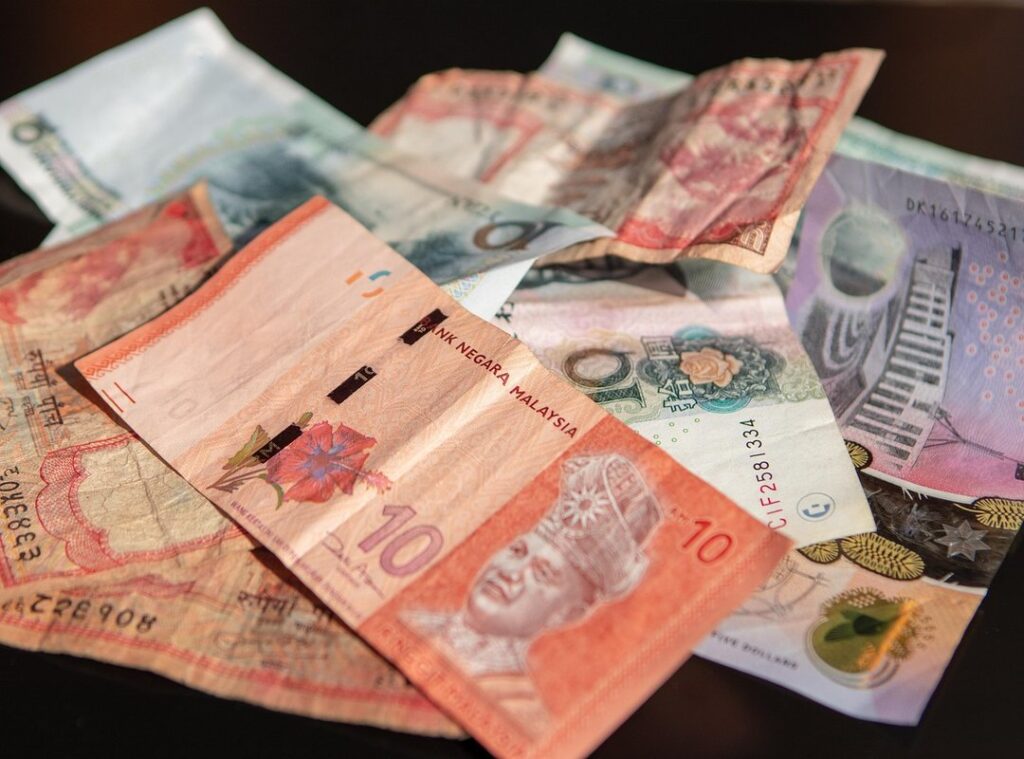
75 ringgit berapa rupiah? As of today, 75 Malaysian Ringgit (MYR) is approximately 2,400,000 Indonesian Rupiah (IDR). But here’s the thing: this number isn’t set in stone.
It changes every day because of those pesky exchange rates.
Why does it change, and well, that’s what we’re here to explain. This guide will not only give you the current conversion but also help you understand why and how these rates fluctuate.
You’ll learn how to calculate conversions yourself. And if you’re planning a trip to Bali, shopping online from an Indonesian store, or sending money to family, knowing this stuff is pretty important. Trust me, it can save you a lot of headaches.
Understanding the Current MYR to IDR Exchange Rate
As of today, the exchange rate for 1 Malaysian Ringgit (MYR) to Indonesian Rupiah (IDR) is 3,400. I checked this on October 5, 2023.
Let’s break it down with a simple calculation. If you have 75 ringgit, here’s how you convert it:
3,400 x 75 = 255,000 IDR
So, 75 ringgit berapa rupiah, and it’s 255,000 Rupiah.
| MYR | IDR |
|---|---|
| 1 | 3,400 |
| 10 | 34,000 |
| 50 | 170,000 |
| 75 | 255,000 |
| 100 | 340,000 |
The currency codes are straightforward. MYR stands for Malaysian Ringgit, and IDR stands for Indonesian Rupiah.
When you see an exchange rate, it’s usually the mid-market rate. This is the midpoint between the buy and sell rates on the global market. It’s what you’d get if you were trading large amounts of money, like banks do.
But when you go to a money changer, they use the tourist rate. This rate includes a margin for the money changer’s profit. So, you might get less Rupiah for your Ringgit at a money changer compared to the mid-market rate.
If you’re planning to travel or send money, always check the mid-market rate first. It gives you a good benchmark. Then, shop around for the best tourist rate you can find.
What Drives the Value of the Ringgit and Rupiah?
Exchange rates are all about supply and demand, driven by each country’s economic health. Simple, right, and but let’s dive a bit deeper.
Central banks, like Bank Negara Malaysia and Bank Indonesia, play a crucial role. Higher interest rates can be compared to a savings account with better returns, attracting foreign investment and strengthening the currency.
Inflation matters too. High inflation in a country can weaken its currency because it loses purchasing power. It’s like your money buys less over time.
Political stability and economic performance also count. A stable government and strong economic growth (GDP) build confidence and attract investors, boosting the currency value.
Now, here’s where it gets interesting. Major commodity prices, like palm oil for Malaysia and coal for Indonesia, can affect their respective currency values. When these commodities do well, the currencies tend to strengthen. 75 ringgit berapa
But here’s a contrarian take: while everyone talks about how high interest rates and strong GDPs boost currencies, they often overlook the flip side. Sometimes, too much foreign investment can lead to a bubble, and when that bubble bursts, the currency can crash. So, it’s not just about having high interest rates; it’s about maintaining a balanced and sustainable economy.
And let’s not forget, 75 ringgit berapa rupiah can vary widely based on these factors. It’s a dynamic relationship, always in flux.
So, next time you hear someone say, “Just follow the interest rates,” remember, it’s a bit more complicated than that.
How to Find the Best Exchange Rates: A Practical Comparison

Start with an anecdote about a trip I took to Malaysia. I needed to exchange some ringgit to rupiah for a side trip to Indonesia. I went to my local bank, and they offered me a rate that seemed off.
That’s when I realized I needed to do more research.
-
Traditional Banks
Traditional banks are reliable but often have less favorable rates and higher fees. They’re convenient, sure, but you might end up paying more than you need to. -
Licensed Money Changers
Next, I checked out licensed money changers in the city. These can offer competitive rates, but it’s crucial to check their legitimacy and compare options. I found one that looked good, but I still felt like I could get a better deal elsewhere. -
Modern Digital Options
Then, I turned to modern digital options like Wise (formerly TransferWise) or Revolut. These platforms use the mid-market rate and have lower, more transparent fees. I ended up using one of these and got a much better rate for 75 ringgit berapa rupiah.
It’s important to be aware of common pitfalls. Exchanging money at airport kiosks without comparing rates or using services with hidden fees in the exchange rate can cost you a lot.
Always check the mid-market rate on Google or XE.com first. This gives you a baseline for what a good rate looks like. Trust me, it makes a huge difference.
Frequently Asked Questions About MYR to IDR Conversion
Is it better to exchange money in Malaysia or Indonesia? Generally, you might find slightly better rates in Indonesia. However, it’s wise to have some local currency on arrival for immediate expenses like transportation from the airport.
Can I use Malaysian Ringgit in Indonesia? No, you must use Indonesian Rupiah (IDR) for all transactions in Indonesia.
How much cash should I bring to Indonesia? This depends on your travel style. Budget travelers might need less, as many places accept card payments and ATMs are widely available in major tourist areas.
Luxury travelers or those heading to more remote locations should carry more cash, as card acceptance and ATM availability can be limited.
Do ATMs in Indonesia give good exchange rates? Yes, ATMs in Indonesia usually offer competitive exchange rates. Be mindful of local bank fees and your home bank’s foreign transaction fees, which can add up.
75 ringgit berapa rupiah is a common query. The exact amount varies with the current exchange rate, so it’s best to check the latest rates online or at a financial institution.
 Frankie Drakershopp has opinions about expert tax insights. Informed ones, backed by real experience — but opinions nonetheless, and they doesn't try to disguise them as neutral observation. They thinks a lot of what gets written about Expert Tax Insights, Tax Law Updates and Changes, Personal Finance Advice is either too cautious to be useful or too confident to be credible, and they's work tends to sit deliberately in the space between those two failure modes.
Reading Frankie's pieces, you get the sense of someone who has thought about this stuff seriously and arrived at actual conclusions — not just collected a range of perspectives and declined to pick one. That can be uncomfortable when they lands on something you disagree with. It's also why the writing is worth engaging with. Frankie isn't interested in telling people what they want to hear. They is interested in telling them what they actually thinks, with enough reasoning behind it that you can push back if you want to. That kind of intellectual honesty is rarer than it should be.
What Frankie is best at is the moment when a familiar topic reveals something unexpected — when the conventional wisdom turns out to be slightly off, or when a small shift in framing changes everything. They finds those moments consistently, which is why they's work tends to generate real discussion rather than just passive agreement.
Frankie Drakershopp has opinions about expert tax insights. Informed ones, backed by real experience — but opinions nonetheless, and they doesn't try to disguise them as neutral observation. They thinks a lot of what gets written about Expert Tax Insights, Tax Law Updates and Changes, Personal Finance Advice is either too cautious to be useful or too confident to be credible, and they's work tends to sit deliberately in the space between those two failure modes.
Reading Frankie's pieces, you get the sense of someone who has thought about this stuff seriously and arrived at actual conclusions — not just collected a range of perspectives and declined to pick one. That can be uncomfortable when they lands on something you disagree with. It's also why the writing is worth engaging with. Frankie isn't interested in telling people what they want to hear. They is interested in telling them what they actually thinks, with enough reasoning behind it that you can push back if you want to. That kind of intellectual honesty is rarer than it should be.
What Frankie is best at is the moment when a familiar topic reveals something unexpected — when the conventional wisdom turns out to be slightly off, or when a small shift in framing changes everything. They finds those moments consistently, which is why they's work tends to generate real discussion rather than just passive agreement.